Introduction
Imagine completing your degree and wanting to start a career in IT, but not knowing where to begin. Which programming language should you learn? How do you build projects? And how do you prepare for your first technical interview? These are common questions among students and freshers who want to enter the software development industry.The good news is that you don't need to know everything from day one. With the right skills, practical experience, and a clear learning plan, you can gradually prepare yourself for your first IT job. In this blog, we'll explore a step-by-step roadmap to help you move from being a student to becoming a software developer.
TL;DR summary
• Choose a direction: Explore different software development roles and identify your interests. • Learn the fundamentals: Build a strong foundation in programming and problem-solving. • Practise through projects: Apply what you learn by developing practical applications. • Build your professional profile: Create a clear resume and showcase your projects on GitHub. • Prepare for interviews: Practise coding questions and learn to explain your projects. • Keep improving: Continue learning, applying for opportunities, and developing your skills.
Choose the Right Career Path
Explore Different Career Paths
The IT industry offers several career opportunities, and software development is just one of them. Before learning multiple programming languages, take some time to explore the available roles and identify your interests.
Common Career Paths in IT • Frontend Developer: Builds the parts of websites that users see and interact with. • Backend Developer: Develops server-side logic, APIs, and database interactions. • Full-Stack Developer: Works on both frontend and backend development. • Mobile App Developer: Builds applications for mobile devices.
For example, if you enjoy designing websites and creating interactive pages, frontend development might interest you. If you prefer working with databases and application logic, backend development could be a better fit.
Beginner Tip: You don't have to decide your entire career on the first day. Start by exploring a field, learn its fundamentals, and gain practical experience before choosing your direction.
Learn Essential Technical Skills
Once you've chosen a direction, the next step is to develop the technical skills required for that role. Start with One Programming Language.Choose one beginner-friendly language, such as Python, Java, or JavaScript, and focus on understanding its fundamentals.
Start by learning: • Variables and data types • Conditional statements • Loops and functions • Lists, arrays, and basic data structures • Object-oriented programming concepts • Error handling and debugging
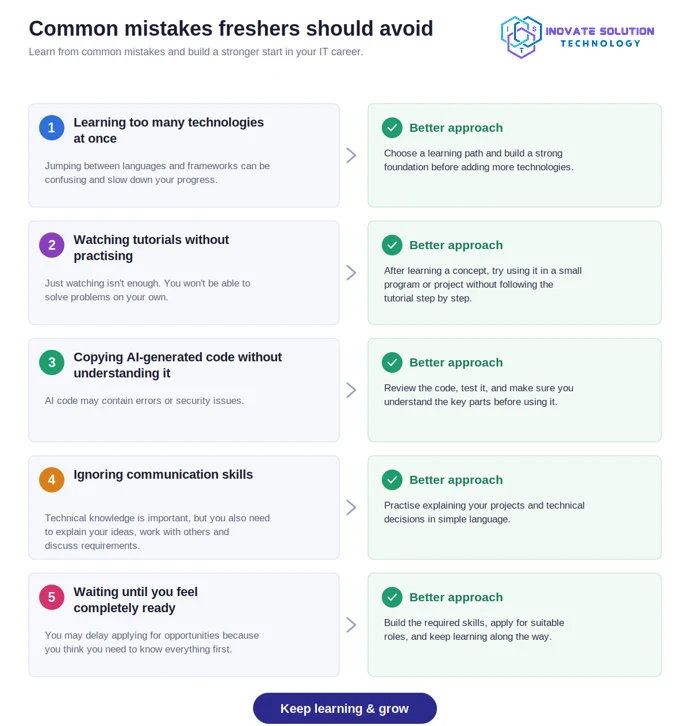
Don't rush to learn multiple languages at once. Understanding programming logic is more valuable than memorising syntax without knowing how it works.
Build Real-World Projects
Have you ever learned a programming concept but struggled to use it in a real application?
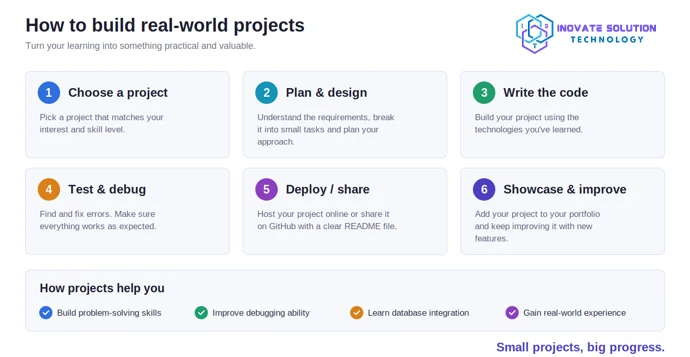
This is why practical projects are important. They help you understand how different concepts work together and give you something concrete to demonstrate to employers. Projects Beginners Can Try 1. Personal Portfolio Website - Create a website that introduces you, highlights your skills, and displays your projects. 2. Student Registration System - Build a simple application that collects student details, validates inputs, and stores information. 3. Task Management Application - Develop an application where users can create tasks, update their status, and track completed work. 4. Expense Tracker - Create an application that records expenses, categorises spending, and calculates totals.
How Do Projects Help?
Projects allow you to practise problem-solving, debugging, database integration, and application design.For example, while developing a task management application, you may need to validate user input, save tasks in a database, and update the interface when a task is completed.These practical challenges help you understand software development beyond individual coding exercises.
Remember: A few well-developed projects that you understand thoroughly are more useful than a long list of projects you cannot explain.
Create a Strong Resume and GitHub Profile
After building some projects, present your skills and work clearly. Your resume and project portfolio help recruiters understand what you can do.
What Should Your Resume Include? A fresher's resume can include: • Contact information and professional links • Career objective or short professional summary • Technical skills • Academic qualifications • Projects and your contributions • Internships, certifications, or relevant experience Keep your resume organised and concise. Mention technologies you have actually used and describe your projects honestly.
Why Is GitHub Useful?
GitHub allows you to store and share your code. You can use it to showcase projects and demonstrate your development progress. For each project, include a README file explaining: • What the project does • Which technologies you used • Its main features • How someone can run it For example, instead of simply writing "Created a website" on your resume, explain the purpose of the website, the technologies you used, and the features you implemented.This gives recruiters a clearer understanding of your practical experience.
Prepare for Technical Interviews
Getting an interview is an important step, but preparation helps you explain your knowledge confidently.Technical interviews may assess programming fundamentals, problem-solving, project knowledge, and your ability to communicate your approach.
Focus on These Areas: • Programming fundamentals: Revise variables, loops, functions, data structures, and other concepts relevant to your chosen role. • Coding practice: Solve beginner-level problems regularly. Focus on understanding the logic rather than memorising solutions. • Project explanation: Be ready to explain your project's purpose, technologies, challenges, and the decisions you made. • Basic technical knowledge: Review databases, APIs, operating system concepts, or web technologies when relevant to the position. • Communication skills: Practise explaining your thought process clearly. If you don't know an answer, be honest and explain how you would approach the problem.
Apply for Jobs and Internships
Once you have developed your foundational skills, completed projects, and prepared your resume, start exploring suitable opportunities.You don't have to wait until you know everything before applying.
Where Can You Find Opportunities? • Company career pages • Professional networking platforms • Job portals • Campus placement programmes • Internship opportunities • Referrals and professional connections
How Can You Improve Your Applications?
Read the job description: Understand the skills and qualifications the employer expects. Customise your resume: Highlight the relevant skills and projects you possess for that particular role. Apply consistently: Set aside time to search for suitable opportunities and submit applications. Track your applications: Maintain a simple list of companies, roles, application dates, and interview updates. Learn from rejection: If you don't receive an offer, identify areas where you can improve and continue practising.
Your first job search may take time. Focus on improving your skills and applying for roles that match your current experience.
Quick Quiz: Test Your Knowledge
Let's see how much you've learned about starting a career in software development.
Q1. What should a beginner focus on first? A. Learning every programming language B. Building a strong foundation in one programming language C. Memorising interview answers D. Applying for jobs without learning the basics
Q2. Why are practical projects important? A. They eliminate the need to learn programming B. They guarantee a job offer C. They help apply technical knowledge to real problems D. They replace the need for interviews
Q3. What is one benefit of using GitHub? A. It guarantees employment B. It automatically makes every project error-free C. It replaces all programming tools D. It helps store and showcase code projects
Q4. What should you do when preparing for technical interviews? A. Practise coding and understand your projects B. Memorise code without understanding it C. Avoid solving problems independently D. Learn only the answers to common questions
Answers: Q1 — B | Q2 — C | Q3 — D | Q4 — A
Conclusion : Your Journey Starts Now
You don't need to know every technology to take your first step. What matters is developing a strong foundation, practising consistently, and being willing to learn from mistakes.The IT industry will continue to evolve, and new tools will change how developers work. Building problem-solving skills and adapting to new technologies can help you prepare for these changes. Remember, becoming a software developer isn't about learning everything at once. It's about taking the right steps, one at a time.
Frequently asked questions
Can I become a software developer as a fresher?
Yes. You can work towards an entry-level software development role by learning relevant programming skills, building projects, and preparing for technical interviews. Requirements vary by employer and position.
Which programming language should I learn first?
Python is often a beginner-friendly choice. Java and JavaScript are also useful options. Choose a language based on your interests and the career path you want to explore.
Do I need projects to get a software development job?
Projects are not mandatory for every role, but they can demonstrate your practical skills and help you explain your experience, especially when you are a fresher.
How can I gain experience without a job?
You can develop personal projects, contribute to suitable open-source projects, participate in coding challenges, or seek internships. These activities help you practise and demonstrate your skills.
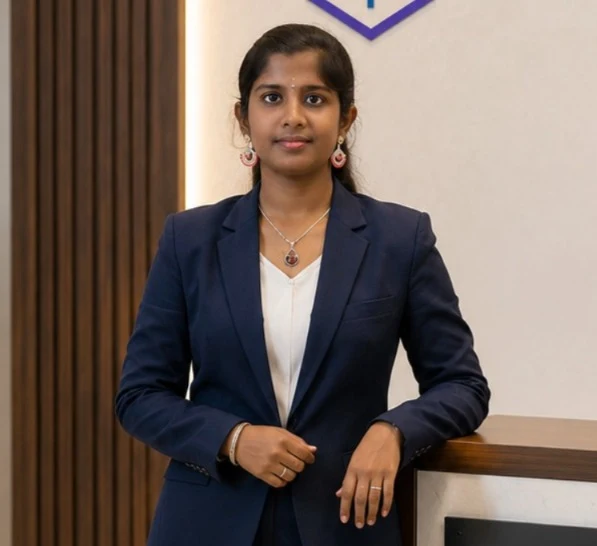
Shalini B
Founder & CEOShalini B, Founder & CEO of Inovate Solution Technology, is a technology professional specializing in Cloud Computing, DevOps, and Software Development.Passionate about innovation and digital transformation, she shares industry insights to empower students, developers, and businesses.
Join the conversation
Be the first to share your thoughts.