
Netflix: Revolutionising Entertainment Through Digital Streaming
How Netflix transformed the entertainment industry through streaming, original content and personalised viewing experiences.
6 min read · 48 views · By Shalini B
- Client / anonymised name
- Netflix
- Industry
- Media and Entertainment (Digital Streaming)
- Service type
- Digital Entertainment, Content Strategy and Brand Marketing
- Project type
- Brand Transformation and Customer Experience Study
- Project duration
- 6 months
- Region
- Global (190+ Countries)
In this case study
Executive Summary
Netflix, Inc. is one of the world's leading entertainment companies, recognized for its subscription-based streaming platform, original productions and personalized viewing experience. Founded in 1997, Netflix developed from an online DVD rental service into a global entertainment company offering films, television series, documentaries, live programming and games. Its strategy combines content, technology and customer experience in a connected digital platform.
Introduction
The entertainment industry has changed significantly with the growth of internet connectivity, smartphones and digital platforms. Traditional television and physical media have gradually been complemented by on-demand streaming services, and companies must continually adapt to changing customer expectations to remain competitive.
Netflix is a prominent example of a company that competes not only through the size of its content library but also through the overall viewing experience. Unlike traditional television broadcasting, it introduced a flexible model where users select content, pause, resume and watch entire seasons according to their convenience. Its original content, recommendation system and global platform contribute to a consistent brand identity.
Company Background
Netflix was founded on August 29, 1997, by Reed Hastings and Marc Randolph in the United States. Its early goal was to offer an alternative to traditional video rental stores through an online DVD rental service, where customers could browse movies online and receive DVDs by postal delivery. A subscription model for DVD rentals followed in 1999, and the company became publicly traded in 2002.
In 2007, Netflix introduced online streaming, allowing customers to watch movies and television shows directly through internet-connected devices. In 2013, it expanded into original programming with productions such as House of Cards, moving beyond distributing licensed content to becoming a content producer. The company later expanded into international markets and mobile gaming, and it now earns revenue from both subscriptions and advertising.
Major Milestones
Years | Major development |
|---|---|
| 1997 | Netflix was founded by Reed Hastings and Marc Randolph. |
| 1998 | Netflix launched its online DVD rental website. |
| 1999 | Introduced a subscription model for DVD rentals. |
| 2002 | Netflix became a publicly traded company. |
| 2007 | Introduced its online streaming service. |
| 2013 | Entered original programming with House of Cards. |
| 2016 | Expanded its service to 130 additional countries. |
| 2021 | Expanded into mobile gaming. |
| 2023 | Ended its DVD-by-mail business after 25 years. |
| 2025 | Surpassed 325 million paid memberships and continued expanding its advertising business. |
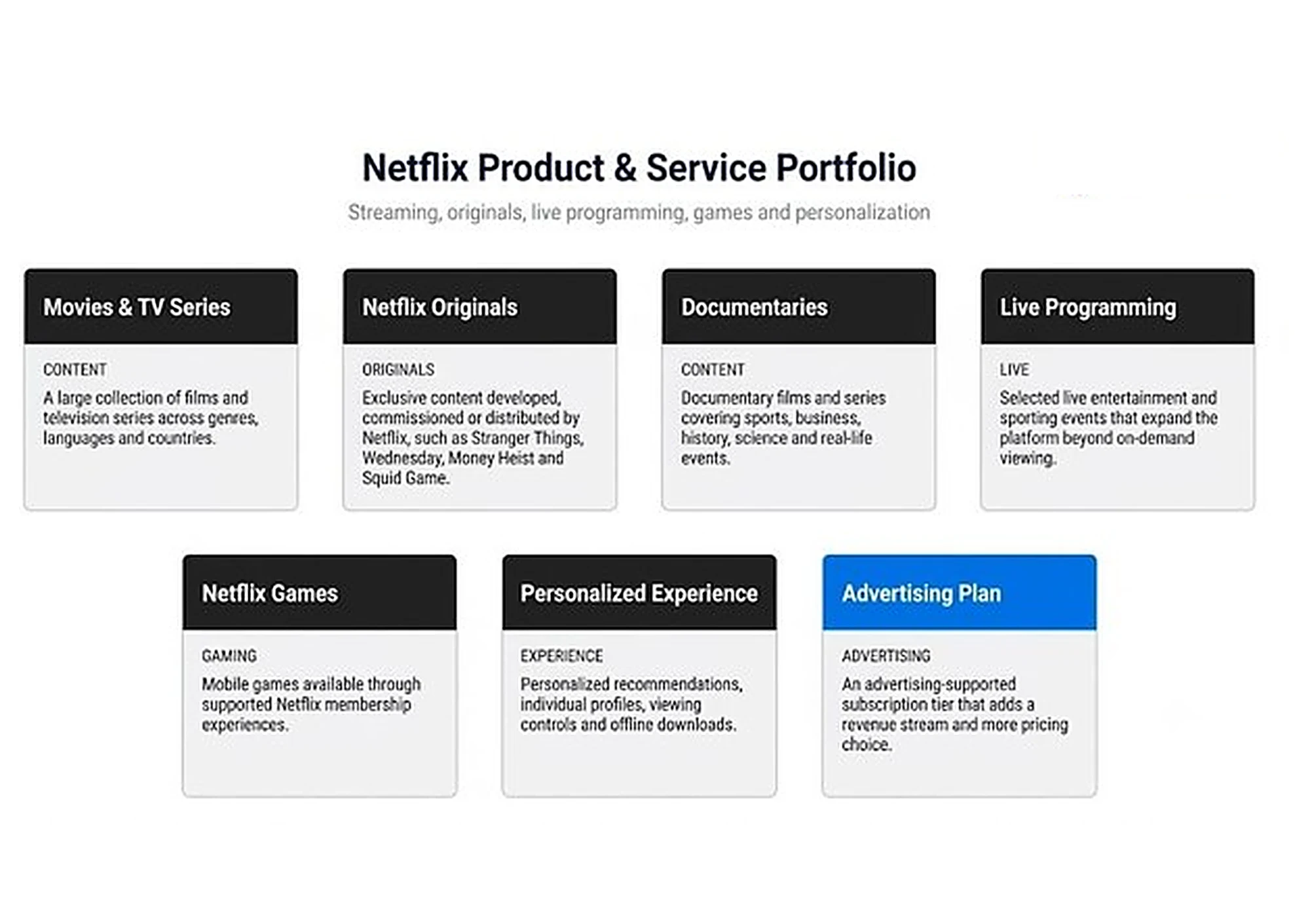
Products and Services
Business Model
Netflix follows a subscription-based digital business model in which customers pay recurring membership fees to access entertainment content. Its main components are:
Subscription revenue : Monthly membership plans are the primary source of revenue. Different pricing plans provide customers with different viewing features and advertising options.
Advertising revenue : Netflix generates additional income through advertisements shown on its advertising- supported subscription plan.
Content investment : Netflix invests in original productions and licensed content to attract new members, retain existing customers and strengthen its entertainment library.
Partnerships and distribution : Netflix works with internet service providers, telecommunications companies and device manufacturers to make its service accessible through different platforms and distribution channels.
Business cycle : Content investment builds the entertainment library, which attracts customer subscriptions and audience engagement. The resulting revenue funds further content investment.
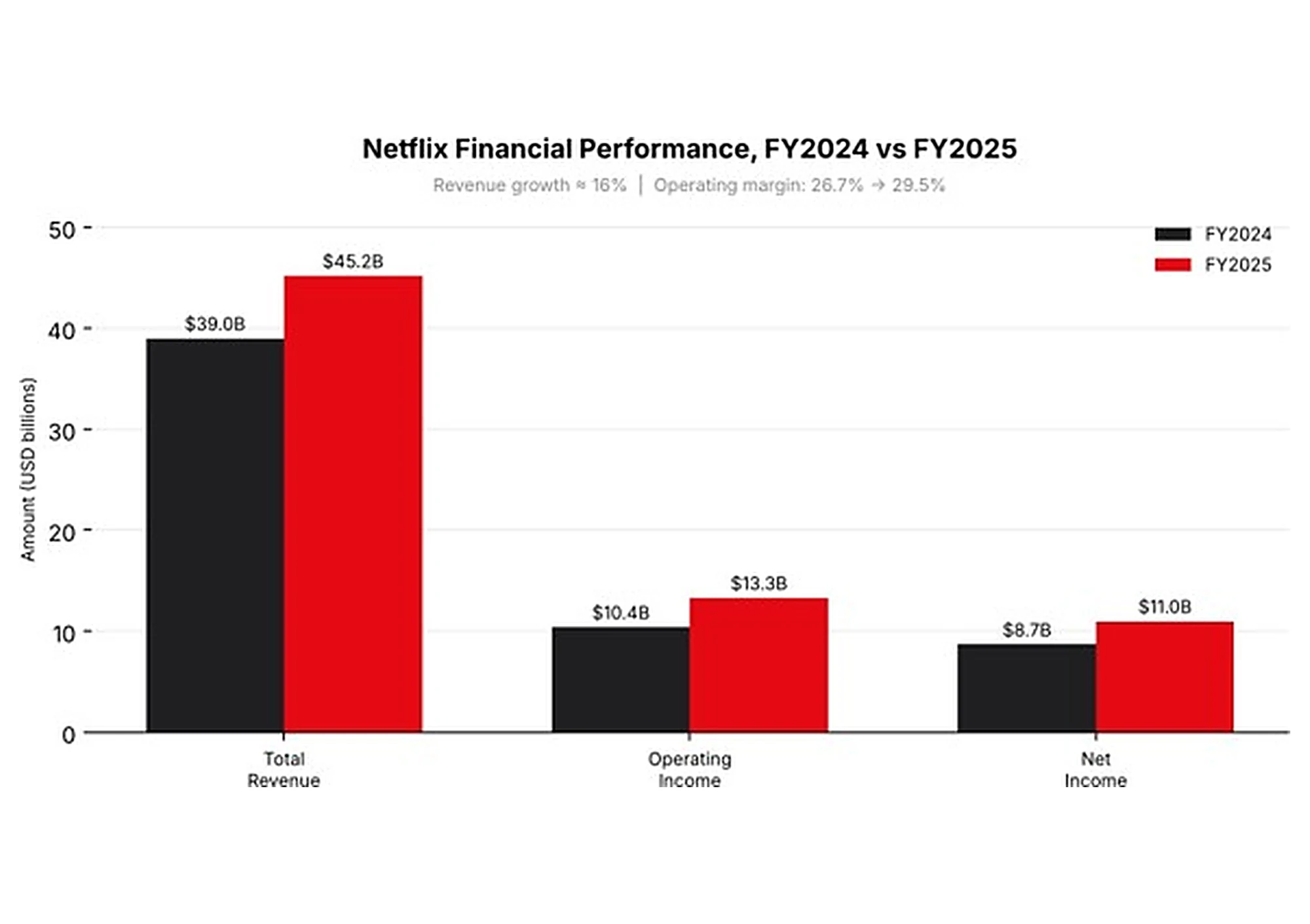
Revenue and Business Performance
Marketing Strategy
Content-based marketing : Netflix promotes its own movies and series through trailers, teasers, promotional campaigns and exclusive releases.
Social media engagement : The company uses platforms such as Instagram, YouTube and other social channels to promote content, interact with audiences and encourage online discussions.
Personalized recommendations : Its recommendation system helps customers discover content based on their viewing activity and preferences.
Regional and localized marketing : Netflix invests in entertainment from different countries and languages. Local productions help the company connect with regional audiences while also reaching international viewers.
Strategic release campaigns : Major content launches are supported by promotional activities, online discussions and entertainment campaigns that create audience interest.
Brand identity : Netflix maintains a recognizable identity through its red-and-black visual branding, logo and consistent digital presence.
Technology and Innovation
- Recommendation algorithms : Netflix
uses recommendation systems
to help members discover films and series
that match their interests.
- Data analytics : Viewing patterns
and engagement data help the company understand audience preferences and make content-related decisions.
- Cloud infrastructure and content
delivery : Netflix uses cloud computing and content delivery technologies to
support its streaming platform and deliver video efficiently to customers
across different regions.
- Adaptive streaming : Streaming technology adjusts
video quality based on available
network conditions, helping
provide a smoother viewing experience.
- User interface and personalization : Netflix continuously improves its interface, search experience, profiles and content discovery features to make the platform easier to use.
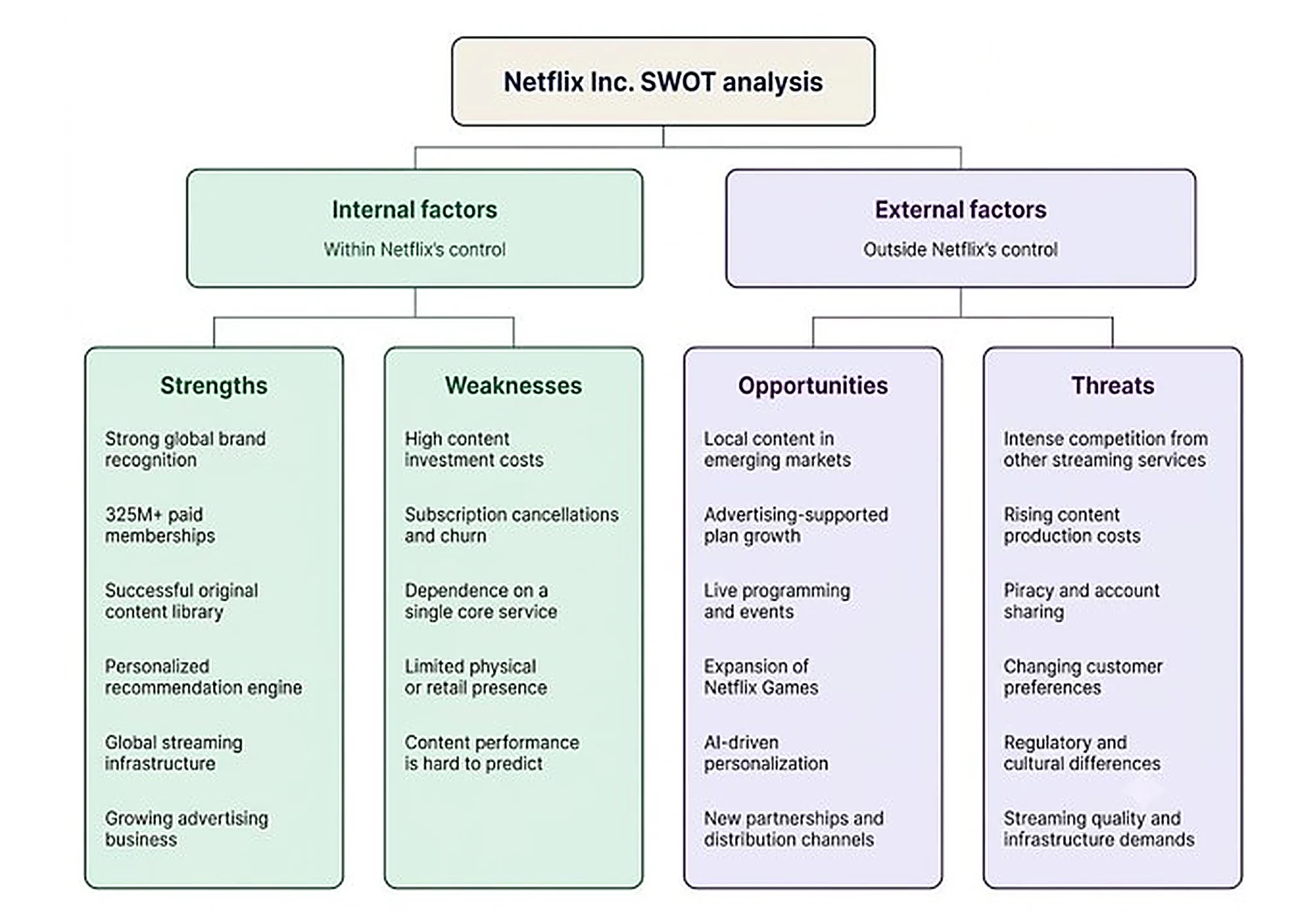
Major Challenges
Intense market competition : Netflix competes with Disney+, Amazon Prime Video, Apple TV and other streaming services, and competitors continually introduce new content and features.
High content investment : Producing and licensing quality entertainment requires significant financial investment.
Customer retention : Customers may cancel subscriptions or move between competing platforms.
Changing content preferences : Audience interests vary across countries, languages and age groups.
Piracy and account security : Unauthorized distribution and security risks can affect the entertainment business.
Technology and infrastructure : Maintaining reliable streaming quality requires continuous technical improvements.
Strategies for Future Growth
- Expand local content production by investing in regional films, series and creators to attract audiences in emerging markets.
- Improve personalized entertainment by using advanced data analysis and AI to improve content discovery and user experience.
- Strengthen advertising opportunities by developing the advertising-supported business while maintaining a suitable experience for subscribers.
- Expand live entertainment by exploring additional live programming and entertainment formats to increase audience engagement.
Key Business Lessons
- Digital transformation creates opportunities: Businesses should recognize technological changes and adapt their business models accordingly.
- Customer convenience matters: Making services accessible, flexible and easy to use can improve customer satisfaction.
- Innovation supports business growth: Netflix continuously developed its services instead of depending only on its original DVD rental model.
- Content and quality build brand value: Offering relevant and engaging products helps businesses attract and retain customers.
- Global expansion requires local understanding: Companies should consider regional preferences, languages and cultural differences when entering international markets.
- Diversified revenue strengthens business models: Combining subscription plans with advertising and other opportunities can support business expansion.
Conclusion
Netflix's journey from an online DVD rental company to a global streaming platform demonstrates the importance of innovation, digital transformation and customer-focused business strategy. The company adapted to changing entertainment habits by introducing online streaming, developing original content and expanding its international presence. Its subscription model, technology-driven recommendations and investment in entertainment have contributed to its business growth.
The company continues to face challenges such as competition, content investment pressures and changing customer expectations. Its ability to adapt and explore new opportunities will remain important to its future. Netflix's experience offers useful lessons in combining technology, business strategy and customer-focused innovation.
Frequently asked questions
What is Netflix primarily known for?
Netflix is known for its subscription-based streaming platform, which provides movies, television series, documentaries and other entertainment content.
Who founded Netflix?
Netflix was founded in 1997 by Reed Hastings and Marc Randolph.
How does Netflix generate revenue?
Netflix primarily earns revenue through monthly subscriptions and also generates additional income through advertising and other business activities.
What makes Netflix different from traditional television?
Netflix provides on-demand entertainment, allowing customers to choose what they want to watch and when they want to watch it.

Shalini B
Founder & CEO